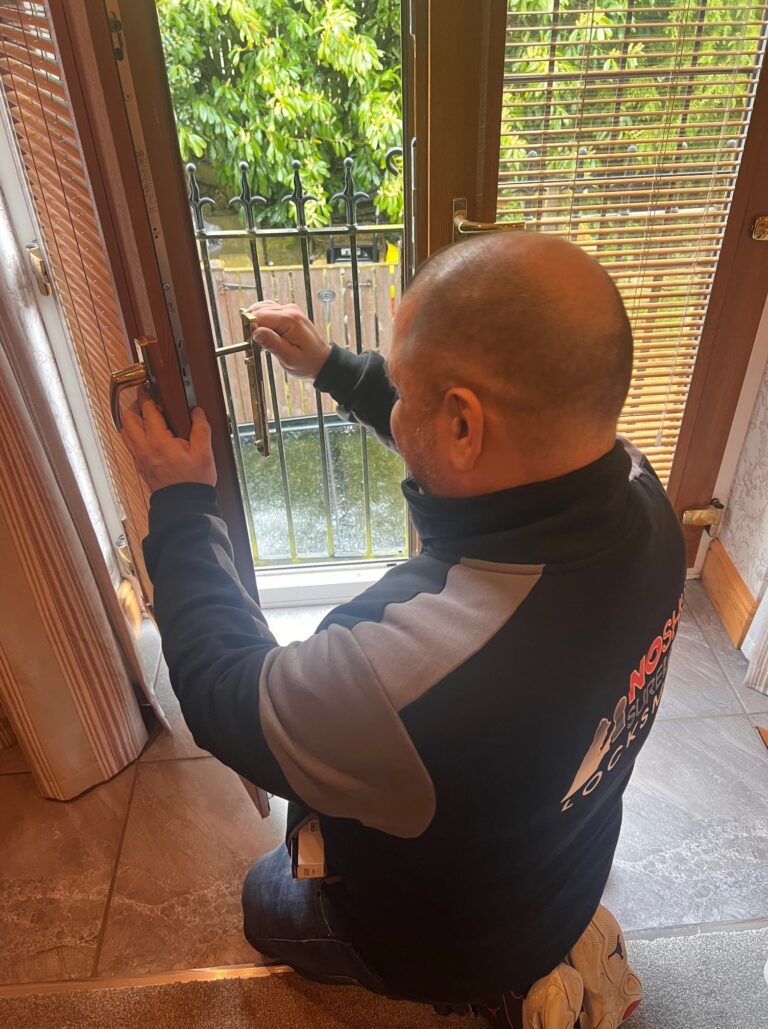
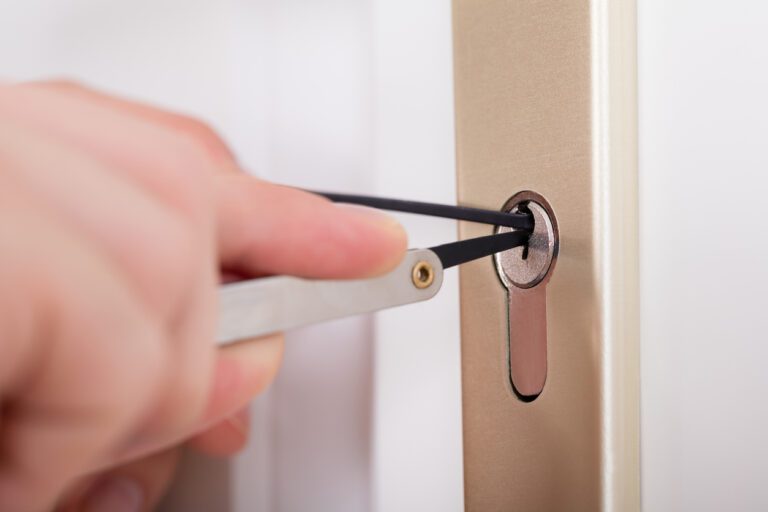
If your door has suddenly become difficult to lock, it is easy to assume that the lock itself has failed.
In our experience, that is not always the case.
Problems with the cylinder, hinges, handles, door alignment, or internal locking mechanism can all make a perfectly serviceable lock feel faulty. This is particularly common with uPVC and composite doors, where several moving parts must align correctly each time the door is locked.
Marc has worked with windows, doors and locks for more than 33 years. One of the first things we check when somebody reports a locking problem is whether the fault is actually coming from the lock or from another part of the door.
Here are some of the signs we look for.
Why can a door suddenly become difficult to lock?
A door and its lock need to work together.
When you close the door, the latch, bolts, hooks or other locking points need to line up with the corresponding parts in the frame. The key or handle then operates the locking mechanism.
If the door’s position changes even slightly, it can affect how easily those parts engage.
We regularly see locking problems caused by:
- Door movement or poor alignment
- Worn or damaged hinges
- A faulty cylinder
- A worn lock
- Problems with the handles
- A damaged multipoint mechanism
- Misaligned keeps in the door frame
- General wear to the door or surrounding hardware
Several of these problems can produce very similar symptoms.
That is why we prefer to find the cause before recommending new parts.
What does it mean if the key is difficult to turn?
One of the first things Marc checks is whether the key behaves differently with the door open and closed.
If the key is difficult to turn in both positions, the cylinder or another part of the lock may be worn or damaged.
If the key operates normally while the door is open but becomes stiff when you close it, we are more likely to investigate alignment.
Closing the door can place pressure on the locking points if they no longer line up correctly with the frame. You then feel that resistance through the key or handle.
This is an important distinction.
Replacing the cylinder will not correct poor door alignment. The new lock could immediately be placed under the same pressure as the old one.
We also advise against repeatedly forcing a stiff key. Excessive pressure can damage the key or place more strain on the locking components.
Why does my lock work when the door is open but not when it is closed?
This is one of the most useful clues we get from customers.
If you can lock and unlock the door normally while it is open, but everything becomes difficult once the door is shut, there is a good chance the relationship between the door and frame needs checking.
The door may have moved slightly because of:
- Hinge movement
- Normal use over time
- Wear on supporting components
- Previous adjustments
- Movement within the door or frame
On a uPVC or composite door, this can make the handle harder to lift or the key more difficult to turn.
Sometimes customers contact us expecting a new lock, and the real problem is that the door needs adjusting.
Correcting the underlying issue can be a better solution than replacing a lock that is still working properly.
Can a dropped door make the lock feel broken?
Yes. This is something we see regularly.
A door does not have to drop very far before its locking points start meeting resistance.
This is especially noticeable on uPVC and composite doors fitted with multipoint locking mechanisms. Several points along the edge of the door need to engage correctly when you lift the handle.
You may notice:
- The handle is becoming harder to lift
- You need to push or pull the door before turning the key
- The lock works better when you put pressure on the door
- The door catches against the frame
- Everything works normally while the door is open
Those symptoms are worth checking before assuming that the cylinder or complete locking mechanism needs replacing.
Our guide to uPVC door repair and maintenance explains some of the other faults that can affect these doors.
How can you tell if the lock itself may be faulty?
Sometimes the lock really is the problem.
Signs that make us look more closely at the lock or cylinder include:
- The key is difficult to turn when the door is both open and closed
- The key no longer enters smoothly
- The lock has become unreliable
- The cylinder feels loose
- The key turns, but does not operate the lock correctly
- There is visible damage around the lock
- The lock has been damaged during an attempted forced entry
- The mechanism feels rough or inconsistent during normal use
Different locks can behave differently when they fail, so these signs do not give a definite diagnosis on their own.
If you are unsure what type of lock you have, our guide to different types of door locks covers some of the common designs found in UK properties.
Can the door handles make it difficult to lock?
Yes.
Handles are part of the operating system on many doors, particularly uPVC and composite doors with multipoint locking.
When you lift the handle, you are usually moving several locking points into position before turning the key to secure them.
If the handles are worn or damaged, that movement can be affected.
We may look for:
- Loose handles
- Excessive movement
- A handle that does not return normally
- Increasing resistance when lifting the handle
- Changes in how the handle feels during normal use
Because the handle and lock are used together, it can be easy to assume that the lock is responsible.
Checking the individual parts helps us avoid replacing the wrong component.
What is a multipoint locking mechanism?
A multipoint mechanism runs along the edge of many uPVC and composite doors.
Instead of locking the door in just one place, the mechanism can engage at several points when you lift the handle.
Depending on the system, these may include hooks, bolts, rollers or other locking points.
One thing we often have to explain is that the cylinder and multipoint mechanism are separate parts.
The cylinder is the part where you insert your key.
The multipoint mechanism is the larger system inside the door.
A new cylinder will not repair a failed multipoint mechanism. In the same way, a perfectly good mechanism does not necessarily need replacing just because the cylinder has developed a fault.
Working out which part has failed matters.
How do we tell if the multipoint mechanism is causing the problem?
A damaged or worn mechanism can cause several symptoms.
Customers may notice:
- The handle no longer lifts normally
- One or more locking points do not move
- The mechanism feels unusually stiff
- The door will not lock even though the cylinder appears to work
- The handle moves, but does not operate the system correctly
The difficulty is that poor door alignment can cause some of the same symptoms.
This is why Marc checks the complete door before condemning the mechanism.
If the locking points are being forced against the frame, the mechanism may simply be struggling because of the pressure being placed on it.
Can wooden doors have alignment problems, too?
Yes.
Marc started his trade career as a window and door installer, so his experience is not limited to modern uPVC systems.
Wooden doors can move within their frames, too.
Mortice locks, night latches and other traditional locks still need to line up correctly with the corresponding keep or strike plate.
If that relationship changes, you may notice:
- The door needs pushing before it will lock
- The latch catches
- The bolt will not fully extend
- Turning the key suddenly requires more force
- New marks appear around the strike plate
In these situations, the lock itself can be working correctly, but struggling because the door is no longer sitting where it should.
Can a locking problem be caused by a previous poor fitting?
It can.
A replacement lock needs to suit the door and be fitted correctly.
Over the years, Marc has dealt with doors where the problem has been made worse by an unsuitable or poorly fitted component.
Examples can include:
- The wrong-size cylinder
- Incorrect fixings
- A lock that does not sit properly in the door
- Hardware fitted under unnecessary pressure
- Door alignment not being checked
- Replacement parts that do not suit the existing system
A newly fitted lock should operate smoothly.
If a replacement is immediately stiff or difficult to use, it is worth checking the installation and the surrounding door rather than assuming the lock simply needs time to settle.
Should you lubricate a stiff lock?
Sometimes lubrication may be appropriate for a particular component, but it is not a fix for every stiff door lock.
If poor alignment is placing pressure on the locking points, the lubricant will not reposition the door.
It will not repair worn handles or a damaged mechanism either.
Using the wrong product can also create additional problems inside some locks.
We would rather understand why the lock has become stiff before trying to mask the symptom.
A sudden change in the way a door locks often tells us more than the stiffness itself.
Does every faulty lock need replacing?
No.
This is something we are quite clear about with customers.
If we can repair an existing lock safely and provide a dependable result, replacing the whole thing may not be necessary.
We look at:
- What has actually failed
- The condition of the remaining components
- Whether suitable parts are available
- Whether the existing lock remains appropriate for the door
- Whether repair is likely to provide a reliable result
- Whether there is a genuine benefit to upgrading the security
There is little value in selling somebody a completely new lock when a smaller repair will solve the actual problem.
The opposite is also true. Repeatedly repairing a badly worn or unsuitable lock may not be the sensible option if replacement is likely to provide a more dependable result.
When is replacing the lock the better option?
There are times when a new lock makes more sense.
This can include situations where:
- The existing lock is badly worn
- The lock has been physically damaged
- Lost or stolen keys have created a security concern
- You have moved into a new property and do not know who may still have keys
- The lock has been affected by an attempted forced entry
- An unreliable lock cannot be repaired dependably
- You want to improve the security of an external door
- The existing lock is no longer suitable
Even then, we still check that the proposed replacement suits the door and surrounding hardware.
Where a new lock is genuinely the right solution, you can read more about our professional lock fitting and replacement service in Bradford.
Why do we check the whole door before replacing a lock?
This is one of the main things Marc’s background brings to the job.
A locking system does not work in isolation.
It relies on several other components, including:
- The door
- The frame
- Hinges
- Handles
- The cylinder
- The locking mechanism
- Keeps or strike plates
A fault in one area can put additional pressure on another.
For example, if a door has dropped, fitting a brand-new lock without correcting the alignment could put the replacement under exactly the same strain as the old one.
That is why we do not automatically replace the first component that appears to be causing trouble.
We want to find the actual cause.
What can you check before calling us?
You do not need to take the lock apart.
In fact, we would normally advise against dismantling anything if you are not confident about what you are doing.
There are, however, some useful things you can observe.
Does the lock work when the door is open?
Try operating it carefully with the door open.
If everything moves normally but becomes difficult once the door is closed, tell us. That can help point us towards alignment.
Has the handle become harder to lift?
A change in handle resistance may be connected with alignment, the handles or the multipoint mechanism.
Is the door catching against the frame?
If the door has started rubbing or catching, that can be another indication that its position has changed.
Is the key stiff all the time?
If the key is difficult to turn regardless of whether the door is open or closed, the lock or cylinder itself may need closer inspection.
Did the problem start after damage or attempted entry?
Tell us if the door or lock has recently been damaged. There may be faults that are not immediately visible from the outside.
These simple observations often help us understand what may be happening before we attend.
Should you force a door that suddenly will not lock?
We would advise against it.
If the handle or key suddenly needs much more force than usual, forcing it can make the problem worse.
For example, if poor alignment is already putting pressure on a multipoint mechanism, repeatedly forcing the handle adds even more strain.
The same applies to a stiff key.
A small fault may turn into a broken component if enough pressure is applied.
If the way the door operates has noticeably changed, it is better to find out why.
Why does experience with windows and doors matter?
No Shut Sure Lock does not only look at the lock.
Marc started working as a window and door installer at 16 and has now spent more than 33 years working with windows, doors, locks and their mechanical components.
His experience includes installation, maintenance, servicing and mechanical repairs.
No Shut Sure Lock itself was established 16 years ago.
That background is useful because customers often call us convinced that they need a new lock when another part of the door is contributing to the problem.
Sometimes the lock does need repairing or replacing.
Sometimes it does not.
Being able to look at the complete door helps us make that distinction.
Frequently asked questions about difficult door locks
Why do I have to push my door before it will lock?
If pushing or pulling the door makes it easier to lock, the locking points may not be lining up correctly with the frame. This can indicate an alignment problem rather than a fault with the cylinder itself.
Why does my uPVC door handle not lift properly?
A stiff uPVC door handle can be caused by alignment, worn handles or a problem within the multipoint locking mechanism. We normally check how the door operates before deciding which component needs attention.
Why does my key work when the door is open but not when it is closed?
This often suggests the lock is meeting resistance once the door is against the frame. Poor alignment is one possible cause and should be checked before automatically replacing the lock.
Does a stiff lock mean I need a new one?
Not necessarily. A stiff lock can be caused by the lock or cylinder, but the door, handles, or mechanism can produce similar symptoms.
Can poor alignment damage a new lock?
Poor alignment can place unnecessary pressure on locking components. If alignment caused or contributed to the original fault, correcting it can help the replacement operate as intended.
How do you know whether a lock needs repairing or replacing?
We look at what has actually failed, the condition of the existing parts, and whether repairing them will provide a dependable result. If replacement is the better option, we explain why before carrying out the work.
Is the lock actually the problem?
Sometimes it is. Sometimes the fault is somewhere else in the door.
The cylinder, mechanism, handles, hinges, frame and position of the door all affect how easily a locking system works.
That is why we prefer to diagnose the cause rather than automatically replace the lock.
With more than 33 years of hands-on experience working with windows, doors and locks, Marc can assess the complete system and explain what is actually causing the problem.
If your door has become difficult to lock and you are not sure why, call No Shut Sure Lock on 07702 752458 and tell us what is happening.